
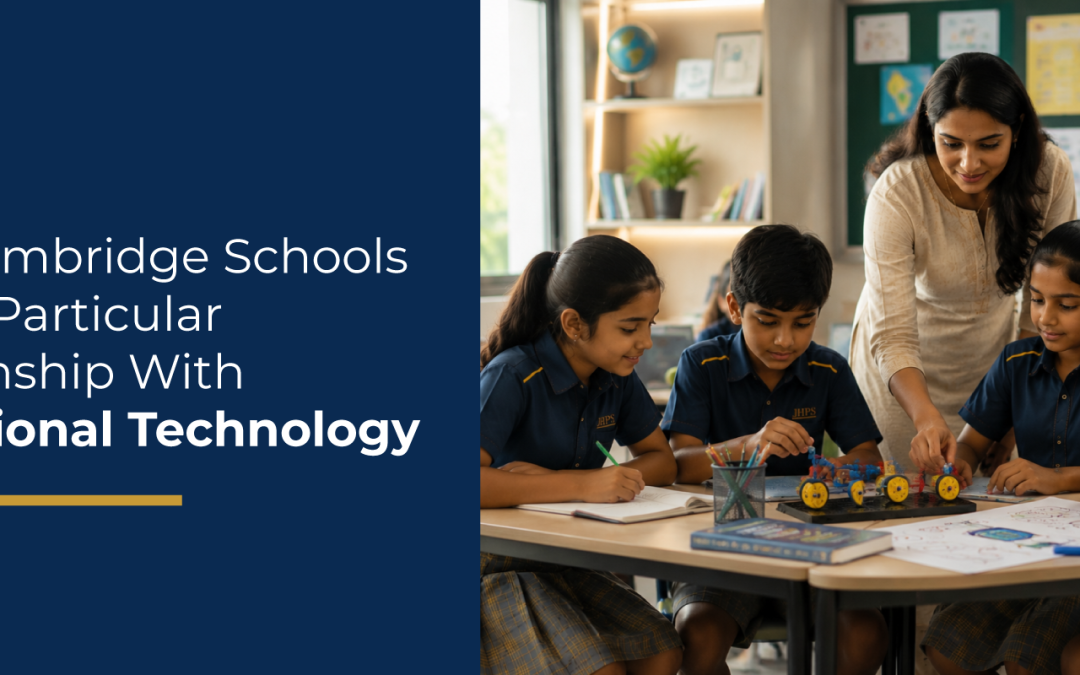
In light of the structure and purpose of the Cambridge curriculum, the technology required for the Cambridge classroom is expected to perform at a higher level than that required by many other curricula. In an inquiry-driven learning environment, students must have the capacity to investigate, question, and discover information. This requires educational technology that enables exploration and discovery, rather than simply serving as a tool for presenting information.
There is a significant difference between a whiteboard that displays prepared slides and one that empowers students to explore, visualise, collaborate, and engage with challenges interactively.
This distinction shapes how the most effective Cambridge schools approach their EdTech investments. The goal is not to accumulate the greatest number of devices or the most impressive-sounding labs, but to ensure that the technology available to students directly supports the thinking, inquiry, and investigation that the Cambridge pedagogical framework demands at every stage of learning, from Early Years through Primary.
Empowering Daily Learning Through Smart Technology
Smart classroom JHPS infrastructure at JHPS Global Learning centres on smart digital learning tools integrated directly into classroom instruction rather than housed separately in a designated technology room. This matters more than it might initially appear to, since technology that students encounter only in isolated lab sessions builds a very different relationship with learning than technology that is a natural, daily part of how a lesson unfolds.
In a scenario where a Cambridge Early Years student applies digital technology to investigate a pattern in math or to document an observation made during an outdoor activity, the digital technology would be supporting inquiry as opposed to taking its place. In the case of a Primary Years student accessing a digital source to do independent research on a topic before joining class discussions, they are developing self-reliant learning skills just like those required in the Cambridge curriculum. Technology in classroom in Hyderabad at this level is not about making lessons more entertaining in a passive sense, but about expanding what a student can actually investigate, create, and contribute within the same instructional period.
STEM, Robotics, and the Maker’s Lab: Hands-On Digital Learning
The STEM and Robotics lab, along with the Innovation and Maker’s lab, are some of the most unique aspects of JHPS Global Learning’s technology infrastructure. These two laboratories have different purposes, but they both form part of a bigger scheme of future-oriented learning experiences.
The Robotics Lab provides students with hands-on experience in programming, designing, and troubleshooting problems related to robotics. The student can’t learn critical thinking through classroom lectures, but the one who faces problems in the lab and tries to find a solution in real time learns critical thinking. This is because a student has to think about why the robot is not performing according to the instructions provided by them and then modify the program to see how it works. Similarly, the Maker’s Lab provides an open environment for innovation that is not limited to a particular discipline.
This dual infrastructure reflects a forward-looking approach to digital learning and Cambridge curriculum delivery, recognising that AI, automation, and technological problem-solving are not simply topics to be studied but skills to be developed through genuine practice. The Space Lab adds another dimension to this, giving students a dedicated environment for inquiry-based science learning that places the cosmos itself within the scope of daily curiosity.
How JHPS Balances Screen Time With Traditional Learning
One of the questions of utmost importance to parents while choosing an advanced technology school for their children is whether there is any proper management of screen time in such an environment where physical activities, creativity, and social interaction are also considered important elements. This particular balance struck by JHPS Global Learning is not random but structural in nature, in that technology is just one means among many others of learning, like sports, arts, performing arts studios, aerobics, modern dance, and even outdoor activities.
This breadth reflects a considered philosophy that digital learning and Cambridge curriculum delivery work best when they sit within a holistic programme rather than dominating it. A student who spends part of their day in the Robotics Lab and another part in a dance or creative arts session is experiencing a genuinely varied set of learning modes, each reinforcing different capacities rather than any single one crowding out the others. Screen time is purposeful and bounded within this structure, rather than being the default mode of every instructional period.
AI Integration and What It Means for Cambridge Learners
The mention of AI within JHPS Global Learning’s programme description signals a forward-looking awareness that classroom technology trends 2026 are moving rapidly toward artificial intelligence as a genuine instructional tool rather than a future aspiration. Cambridge students in particular benefit from AI introduction early on, because of how fitting it is with the curriculum’s mission to prepare students for a world that is yet to be formed, especially considering that it is increasingly important to know how AI works, what it can accomplish, and even more importantly, what it cannot take the place of.
AI inclusion in teaching in the context of Cambridge Primary Years, through the use of the Robotics Lab and computing lessons, gives students a framework that will be useful for any stage of their academic or professional journey ahead of them. This is because the critical aspect plays an important role alongside the technical one, as a student who knows AI well enough to start asking questions about its results and limitations is developing the right kind of thinking that Cambridge International views as learning.
E-Learning Access and the Extension of Learning Beyond School Hours
Online Cambridge learning platforms and digital resources extend a student’s learning well beyond the physical school day, while JHPS Global Learning’s modern library, with its extensive physical and digital book collections, supports this extended access seamlessly. A student who can continue a line of inquiry initiated in class through digital resources at home develops the research habits and self-direction that the Cambridge approach to learning actively encourages.
Digital access to e-books and online learning resources also supports the Cambridge framework’s expectation that students take increasing ownership of their learning journey throughout the Primary Years, rather than relying entirely on classroom instruction for every new piece of knowledge they acquire. JHPS’ digital innovation is not confined to school hours; instead, it creates a connected learning environment that students can access from home, allowing them to sustain the momentum of an inquiry rather than waiting until the next school day to continue it.
What This Means for Families Choosing a Cambridge School in Hyderabad
For parents evaluating EdTech Cambridge schools in Hyderabad, the JHPS Global Learning model offers a useful benchmark for what thoughtful technology integration actually looks like in practice. It is not the school with the most devices or the loudest claims about being digital-first; it is the school where technology has been deliberately embedded into a broader learning vision, serving the Cambridge curriculum’s goals of inquiry, independence, and real-world readiness rather than existing as an expensive layer of novelty around an otherwise conventional educational experience.
At JHPS Global Learning, nearly four decades of academic tradition under the Jubilee Hills Public School name provide the values foundation on which a genuinely modern, Cambridge-aligned curriculum has been built, where smart digital learning tools, Robotics and Maker’s Labs, a Space Lab for inquiry-based science, and AI-focused programming sit alongside art studios, sports facilities, and a student wellbeing centre that ensures technology never crowds out the fully human dimensions of a child’s development.
Frequently Asked Questions
What technology tools does JHPS use in classrooms?
JHPS Global Learning’s Cambridge wing integrates smart digital learning tools across classrooms, alongside dedicated STEM and Robotics Labs, an Innovation and Maker’s Lab, a Space Lab, and a modern library with digital and e-book access. Technology is embedded into daily instruction rather than confined to standalone computer sessions.
Are smart boards used in Cambridge schools in Hyderabad?
Yes, smart digital learning infrastructure forms a core part of how JHPS Global Learning delivers its Cambridge curriculum, supporting the inquiry-based, interactive teaching approach that Cambridge International frameworks demand at Early Years and Primary stages.
How does JHPS balance screen time with traditional learning?
JHPS Global Learning structures technology as one element within a broader daily programme that includes sports, creative arts, performing arts, aerobics, contemporary dance, and outdoor activities. Screen time is purposeful and bounded within a holistic timetable rather than being the default mode of instruction.
Is AI being integrated into Cambridge school curriculums?
JHPS Global Learning’s programme includes AI and robotics as part of its future-ready learning vision, with the STEM and Robotics Lab providing hands-on exposure to programming, automation, and problem-solving that builds foundational AI literacy from the Cambridge Primary Years stage.
Do JHPS students have access to e-learning platforms at home?
JHPS Global Learning’s modern library includes digital and e-book resources that extend learning beyond school hours, supporting the Cambridge framework’s emphasis on self-directed inquiry and independent research as students progress through the Primary Years.