
These days, many parents are no longer worried only about marks. Somewhere along the way, the bigger concern has always been whether children are actually learning to think for themselves. A child may score well in exams and still hesitate when asked a simple unexpected question. That gap is hard to ignore once someone notices it. That is partly why interest in a Cambridge school has grown over the years. Parents are beginning to look beyond textbooks and routines. They want classrooms where children are allowed to ask questions, think differently, and slowly become confident in their own ideas.
At JHPS Global Learning, we often see how children change when learning becomes less rigid. Some students who are quiet at first slowly begin participating. Others become more curious once they realize there is space to look at ideas instead of only memorizing answers. The change usually happens little by little.
Learning Feels Different When Children Are Asked To Think
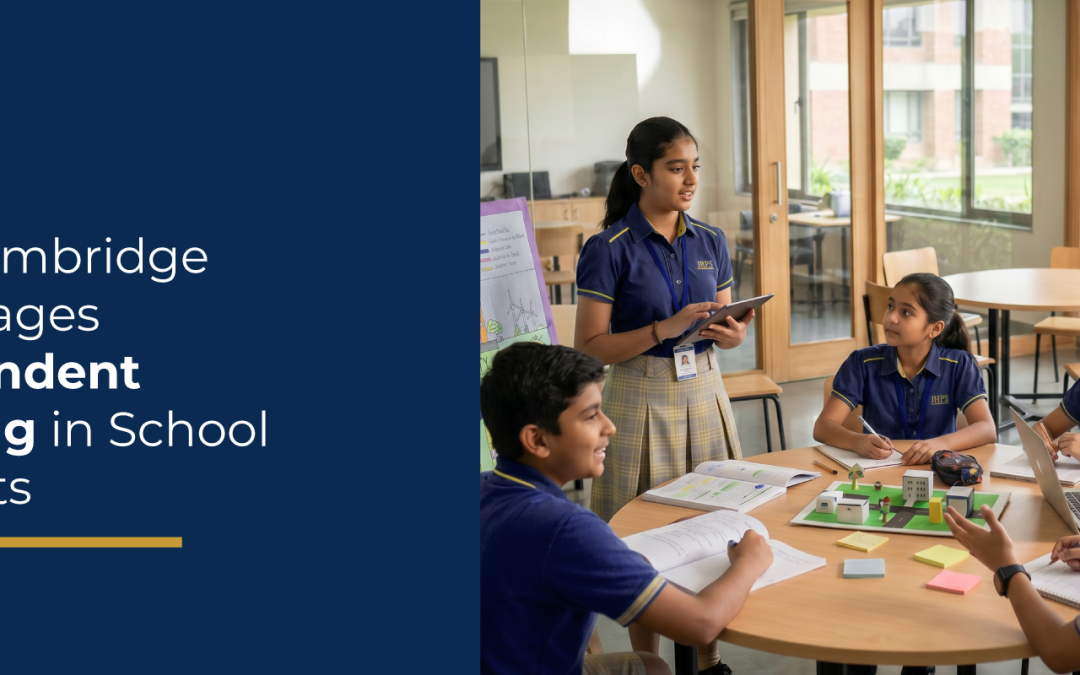
In many schools, learning still revolves around repetition. Students study chapters, remember important lines, and reproduce them during tests. It works for exams, but it does not always build understanding. The Cambridge approach shifts attention toward exploration and participation. Instead of simply giving information, teachers encourage students to discuss, question, and connect ideas. A classroom becomes more conversational. Children are expected to think, not just listen.
At JHPS Global Learning, we follow this learner-centered philosophy closely because children learn better when they are involved in the process. In our Cambridge Early Years and Primary Years programs, students are encouraged to stay curious from the beginning. Sometimes that curiosity appears in very ordinary moments. A child asks why planets move a certain way. Another student wants to know why a story character behaved differently from others. Those conversations may seem small, but they slowly build independent thinking. Over time, students also begin developing critical thinking skills because they are learning how to understand ideas instead of simply storing information.
Fear Often Stops Children From Thinking Freely
One thing adults sometimes forget is how much children worry about being wrong. In classrooms where every answer feels judged immediately, many students stop speaking openly after a while. The Cambridge system tries to reduce that fear. Mistakes are treated as part of learning rather than something embarrassing. Students are encouraged to try, reflect, and improve gradually. At JHPS Global Learning, one of the best Cambridge curriculum schools in Hyderabad, we believe children think more confidently when they feel comfortable in their learning environment. That is one reason we focus strongly on individual attention and meaningful teacher–student interaction.
A child who feels heard usually participates more naturally. This approach also strengthens problem solving critical thinking because students learn how to work through challenges patiently instead of depending completely on memorized solutions. Real learning becomes less mechanical and more thoughtful.
Technology Matters, But Thinking Matters More
Modern schools speak constantly about robotics, AI, and digital learning tools. Those things are useful, but technology alone does not create thoughtful learners. Children still need opportunities to experiment and look at ideas independently. At JHPS Global Learning, we integrate STEM learning, Robotics Labs, AI-assisted learning, and Space Lab experiences because practical learning helps students understand concepts more deeply. When children build, test, and improve something themselves, they remember the experience differently.
This is also where design thinking for school students becomes important. Students learn how to approach problems step by step. Sometimes an idea works immediately. Sometimes it fails and needs adjustment. That process teaches patience, flexibility, and creativity in a very natural way. Our Maker’s Lab and inquiry-focused science spaces are designed around that idea of active learning rather than passive memorization.
Children Need Space To Grow In Different Ways
Not every child expresses confidence through academics alone. Some become more open through sports. Others discover confidence through music, dance, reading, or art. Growth happens differently for every student. At JHPS Global Learning, we have always believed education should support the whole child, not only exam performance. That is why holistic development remains an important part of our learning environment.
Students participate in Creative Arts, Physical Education, Contemporary Dance, Library activities, music, and collaborative experiences alongside academics. These spaces allow children to look at interests freely and develop social confidence naturally. Even simple habits like regular reading quietly shape the way children think. A child who reads widely often begins noticing details, asking questions, and reflecting more deeply without being told to do so.
Why More Parents Are Looking At Cambridge Schools
There has been a visible rise in parents searching for Cambridge schools in Hyderabad because many families now want learning to feel more balanced and future-focused. Searches for Cambridge syllabus schools near me or Cambridge school near me are often connected to a larger concern. Parents want children to become adaptable, thoughtful, and emotionally confident, not just academically prepared. At JHPS Global Learning, we understand that expectation well. As part of the Jubilee Hills Public School legacy, we wanted to build a learning environment that combines strong values with modern global education practices.
We believe discipline and curiosity can exist together. Tradition and innovation do not need to compete with each other. Many families also look at Cambridge board schools in Hyderabad because they are searching for classrooms where students are encouraged to participate actively instead of relying completely on rote learning.
What Makes JHPS Global Learning Different
At JHPS Global Learning, learning is designed around inquiry, reflection, creativity, and participation. Our classrooms encourage students to discuss ideas openly, work collaboratively, and think independently. Assessments include projects, presentations, classroom discussions, reflections, and practical activities alongside regular evaluations. We have built spaces that support this learning culture through smart classrooms, Robotics Labs, Space Labs, libraries, sports facilities, innovation spaces, and student well-being support systems.
Still, the most important thing for us is not the infrastructure alone. It is the atmosphere students experience every day. We want children to feel curious without fear. We want them to become comfortable asking questions. We want them to grow into learners who trust their own thinking. That is often what families searching for the best international schools in Hyderabad are truly hoping to find.
Final Thoughts
Independent thinking does not develop suddenly. It grows quietly through everyday learning experiences, conversations, mistakes, and reflection. The Cambridge approach supports this naturally because it values understanding over memorization. Students learn how to think through ideas instead of depending only on fixed answers. At JHPS Global Learning, we continue working toward creating classrooms where curiosity stays alive and learning feels meaningful. In the end, that ability to think clearly and independently may stay with a child far longer than any exam score ever will.