
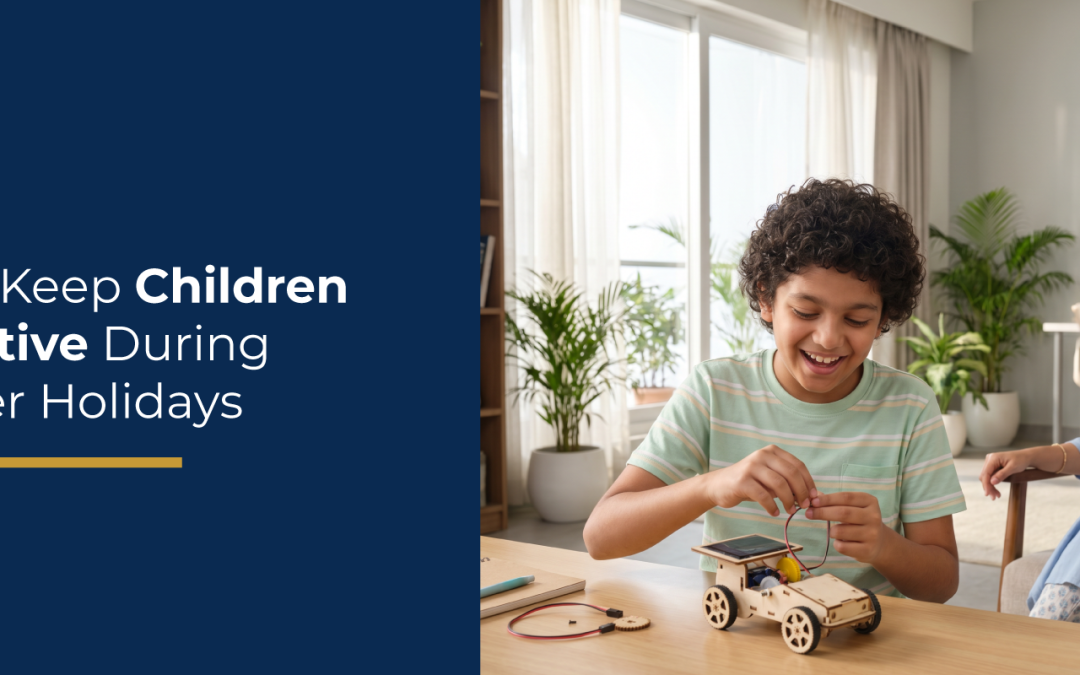
Summer holidays always sound exciting in the beginning. Children wait for them for months, and parents usually imagine long relaxed days with no homework stress. Then after a week or two, something shifts. The routine disappears, screen time slowly takes over, and the days start blending into each other. It happens in most homes, not because children are lazy, but because too much free time without direction can feel confusing even for adults. The strange thing is that productivity during summer vacation does not really mean keeping children busy every second. It means helping them stay curious, active, and emotionally balanced while still enjoying the break. That balance is harder than it sounds.
At JHPS Global Learning, this idea is taken seriously. We believe children learn best when learning does not feel forced. Some of the most meaningful growth happens outside textbooks, especially during holidays when children finally have space to think, explore, and try things without fear of marks or exams.
Children Need Rhythm More Than Strict Schedules
Many parents try to create a timetable the moment holidays begin. Sometimes that works for a few days, but children usually stop following it because it feels too much like school again. A softer rhythm often works better. A child who reads in the morning, spends time outdoors in the evening, and learns one small skill during the day is already having a productive holiday. The idea is not to control every hour. It is to stop the whole break from turning into endless scrolling and boredom.
At JHPS, we often notice that children respond better when activities feel natural instead of planned too tightly. That is one reason why thoughtful summer holiday activities for kids matter so much. They give children structure without making them feel trapped inside another academic routine.
Small Activities Often Leave Bigger Memories
People sometimes think productivity has to look impressive. A child joining ten classes during the holidays may look productive from outside, but children also need space to slow down and notice simple things. Something as small as helping in the kitchen, watering plants, building paper models, or learning a dance routine can quietly build patience and confidence. Even simple crafts for kids to make often teach focus in ways worksheets cannot.
At JHPS Global Learning, creativity is treated as part of learning, not separate from it. Through creative arts, music, robotics, and hands-on activities, children discover how learning can feel enjoyable instead of stressful. It becomes less about performance and more about participation. That matters because children remember feelings more than instructions.
Reading Changes the Mood of a Holiday
There is usually one moment during every summer when a child gets genuinely absorbed in a story. It changes the atmosphere of the entire day. Reading slows the mind down in a good way. Not every child naturally reaches for books, though. Sometimes they only need the right environment. A quiet corner, fewer distractions, and access to the best books to read can completely change their relationship with reading.
We at JHPS have always believed libraries should feel welcoming instead of intimidating. That is why our modern library spaces and reading corners are designed to encourage curiosity. Children often begin reading simply because they feel relaxed enough to explore without pressure. Books also help children stay mentally active during holidays without making them feel like they are studying.
Physical Activity Keeps Children Emotionally Balanced
Children become restless when their bodies are inactive for too long. It shows up as irritability, laziness, or constant dependence on screens. Outdoor movement quietly solves many of these problems. Sometimes parents search for endless fun summer activities for kids, but children often enjoy the simplest things most. Running races, cycling, swimming, or playing old-fashioned games with friends can completely transform their mood.
At JHPS Global Learning, physical education is treated as essential, not optional. Children are encouraged to explore sports, aerobics, dance, and movement-based learning because confidence often grows through physical activity first. Even access to a safe kids swimming pool can make summer feel healthier and happier. Swimming teaches discipline without children even realizing it. It also helps them stay active during extremely hot months.
Learning Can Happen Quietly Through Play
There is a reason children learn quickly while playing. They are relaxed. They are not worried about being wrong. That is why fun activities to do in the summer like robotics, puzzles, storytelling, painting, or even discussing random questions at home can become meaningful learning experiences. Sometimes parents overlook these moments because they do not look “educational” enough.
At JHPS, inquiry-based learning is part of everyday teaching. We encourage exploration, reflection, and problem-solving from the early years itself. Through STEM labs, robotics, AI integration, and practical learning spaces, children learn how to think independently instead of memorising information mechanically. Even traditional games still matter. Asking children about an indoor and outdoor games name they want to try can open conversations that lead to teamwork, movement, and creativity.
Summer Camps Feel Different When They Are Thoughtful
Not every summer camp creates meaningful experiences. Some become overcrowded schedules where children move from one activity to another without enjoying any of it. The good ones feel different. Children return home talking about what they made, what they discovered, or who they met. That usually means the environment allowed them to feel comfortable enough to participate freely.
We at JHPS understand why parents look carefully at summer camps for kids now. Families want spaces where children feel safe, inspired, and emotionally supported. That is why holistic development matters so much to us. Whether through sports, arts, reading, science exploration, or teamwork activities, children need environments that help them grow naturally. Even food and rest become part of that experience. Nutritious meals and healthy food for kids in summer play a bigger role than people realise because tired, dehydrated children rarely stay engaged for long.
Why JHPS Global Learning Feels Different
Among many Cambridge schools in Hyderabad, JHPS Global Learning carries something that feels steady and thoughtful at the same time. We combine nearly four decades of educational values with a more global, future-ready approach. At JHPS, children are encouraged to think critically, ask questions, create freely, and grow with confidence. From spacious classrooms and robotics labs to arts studios, sports facilities, digital learning, and emotional well-being support, the environment is built around balanced growth.
Final Words
At JHPS, we believe productivity during holidays is not about pressure. It is about helping children remain curious about the world around them. Sometimes that happens through books. Sometimes through movement. Sometimes through conversations that seem small at first but stay with a child for years. And honestly, children do not really need perfect holidays. They just need meaningful ones.