
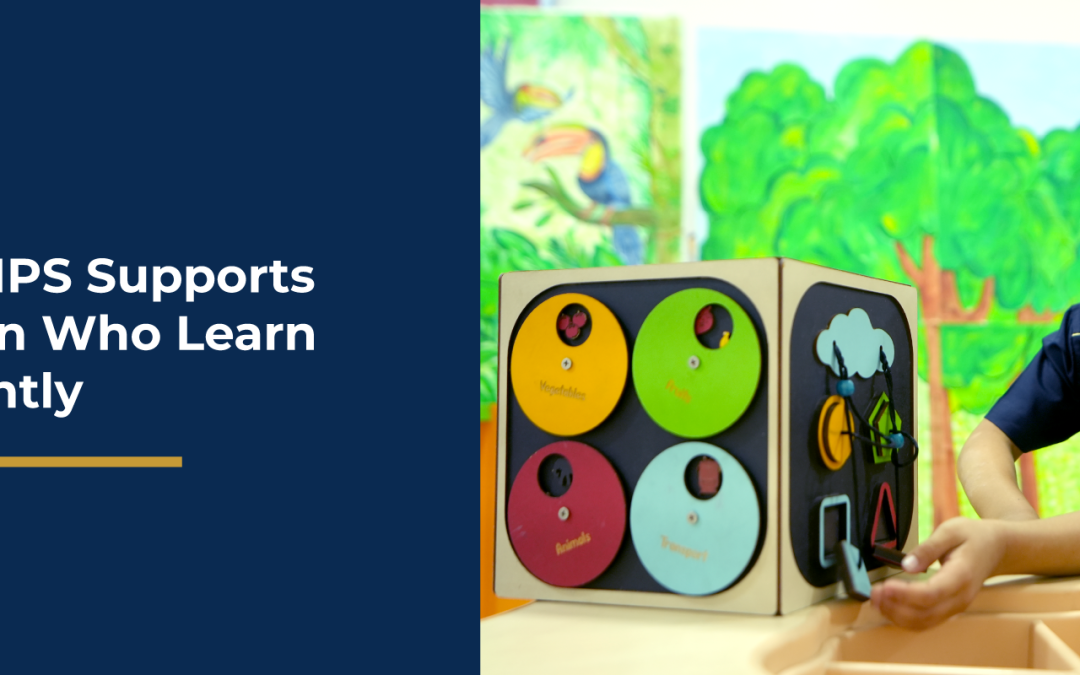
Some children pick up reading quickly. Some need more time before letters begin to make sense. Others understand ideas well but struggle to write them down. Watching children learn is often a reminder that learning has never been one single path.
That is where schools begin to matter in a different way. A child who learns differently does not always need a completely different classroom. Often, they need adults who notice where the difficulty begins and stay with them until learning feels possible again.
At JHPS Global Learning, we believe every child deserves that chance. Instead of expecting every student to fit one method, we try to understand how each child learns and build support around those needs. That belief shapes the way we think about inclusive education for children with learning difficulties every day.
Looking Beyond Marks To Understand A Child
A child can seem distracted in class, avoid reading aloud, or take longer to finish written work. It is easy to mistake these moments for a lack of effort. Sometimes, though, they point toward a learning gap that needs attention rather than judgment.
We spend time understanding those gaps instead of rushing to label them. At JHPS Global Learning, our Learning Resource Center looks closely at a child’s strengths, challenges, and learning abilities before planning support. The goal is not to compare one child with another. It is to understand what helps that child move forward.
This approach often changes the conversation from “Why is this child struggling?” to “What does this child need to learn better?”
Support Should Feel Personal, Not Separate
Children usually know when they are being treated differently. That is why support should never feel like being pushed away from classmates or being made to feel less capable.
At JHPS Global Learning, support happens through thoughtful planning while keeping children connected to their school experience. Our psychologists and special educators work together to understand each learner’s academic and emotional needs. Based on those observations, we create an individualized learning plan for students through an Individualized Education Program, or IEP.
The plan is designed around the child, not around a fixed classroom routine. It may include different teaching methods, classroom accommodations, modifications, or exemptions wherever needed. The idea is always to provide support in the least restrictive environment so children continue learning alongside their peers as much as possible.
The Learning Resource Center Creates Space For Progress
Progress does not always arrive in big steps. Sometimes it appears when a child reads a paragraph without stopping, answers a question with confidence, or walks into class feeling less anxious.
Our Learning Resource Center exists for those small but meaningful moments. It is a space where children receive focused guidance without feeling that they are being separated because they are different.
The work goes beyond academics. Emotional well-being is equally important because learning and confidence are closely connected. When children feel understood, they often become more willing to try again, even after finding something difficult.
That quiet support can make school feel safer instead of overwhelming.
Teachers Adjust The Way Learning Happens
One sentence guides much of what we do at JHPS: if a child cannot learn the way we teach, we teach them the way they learn.
That sounds simple, but it changes everyday classroom experiences. Not every lesson needs to look exactly the same for every student. Some children benefit from visual explanations. Others need activities, repetition, or extra time before concepts become clear.
The way we see it is that teaching needs to be flexible enough to accommodate learners at their level. One-on-one interaction, reduced teacher-to-pupil ratio, and an environment where different ways of learning are used help keep children interested rather than disengaged.
This is also one reason many parents look for schools with special needs support in Hyderabad when choosing a learning environment that understands these differences.
Emotional Support Matters As Much As Academic Support
School is not only about lessons and homework. Friendships, confidence, expectations, and emotions are part of learning too.
At JHPS Global Learning, our Guidance and Counselling program supports students through those everyday experiences. We offer a safe and confidential space where children can speak about academic pressure, personal worries, or social challenges without fear of being judged.
Sometimes a conversation helps a child understand their own feelings better. Sometimes it helps them develop practical ways to manage stress, resolve conflicts, or build confidence.
Support becomes meaningful when children know someone is listening.
Parents Become Part Of The Journey
Learning support works best when school and home are not moving in different directions.
We believe parents should understand how their child is learning, what progress is being made, and where additional encouragement may help. Regular communication creates consistency between home and school, making children feel supported rather than confused by different expectations.
When parents become partners instead of spectators, children often feel less pressure and more reassurance.
That shared understanding is an important part of inclusive education for children with learning difficulties, because support continues beyond the classroom.
A School Where Every Child Belongs
An inclusive school is not only about having special educators or learning programs. It is about creating an environment where children feel accepted while learning differently.
At JHPS Global Learning, that environment extends into everyday school life. Along with academics, children participate in arts, sports, creative activities, leadership opportunities, and collaborative learning experiences. Every learner gets opportunities to discover strengths that may not appear in traditional classroom assessments.
Whether it is inquiry-based learning in the Cambridge curriculum, creative exploration, STEM activities, robotics, music, or sports, children are encouraged to grow in more than one direction. Feeling included often begins with feeling seen.
How JHPS Global Learning Builds A Supportive Future
At JHPS Global Learning, we believe supporting children who learn differently is not a separate program. It is part of the way we think about education itself. Our classrooms combine strong academic foundations with emotional support, personalized learning, and opportunities for holistic development. Through our Learning Resource Center, experienced psychologists, special educators, counsellors, and teachers work together to help every child grow with confidence.
We also believe future-ready education should remain deeply human. Alongside the Cambridge curriculum, STEM learning, robotics, arts, sports, and well-being programs, we continue creating spaces where children feel valued for who they are. Our focus is not simply helping students keep up. It is helping each child discover a way of learning that feels meaningful, comfortable, and lasting.
Every Child Learns In Their Own Way
There is something comforting about letting go of the idea that every child should learn at the same pace.
Some children need different explanations. Some need extra patience. Some simply need someone to notice that they are trying, even when progress is slow.
At JHPS Global Learning, we believe learning differences should never become barriers to belonging. With thoughtful guidance, personalized support, and a caring school community, children can continue learning in ways that make sense to them.
That is what an individualized learning plan for students is really meant to do. It is not about changing who a child is. It is about changing the path so learning becomes possible, one step at a time.