
People often talk about school as if it begins when serious subjects appear. Reading, writing, numbers, tests. But the truth is, learning begins much earlier than that. Long before children understand what “studying” even means. Those early years are strange and beautiful at the same time. A child is curious about almost everything. A shadow on the wall, a bug in the garden, the sound of rain hitting a window. Nothing feels small to them. And that curiosity, if handled gently, becomes the foundation of how they learn later in life. That is where the kindergarten curriculum quietly matters. Not because children need pressure or performance, but because the environment around them can either protect that curiosity or slowly replace it with routine.
Why The Cambridge Approach Feels Different
Some parents hear “Cambridge” and immediately think of exams or international standards. That part exists, of course. But in the early years, the approach was surprisingly gentle. The Cambridge early years framework is less about pushing children forward and more about watching how they naturally grow. Instead of asking whether a child can memorize something, it looks at how they look at things, ask questions, move, and communicate. Learning doesn’t appear as separate boxes like language, numbers, or creativity. It blends together.
A child building a small block tower may actually be learning balance, patience, problem-solving, and even early mathematics without realizing it. This is often why parents searching through Cambridge syllabus schools in Hyderabad start noticing something interesting. The classrooms don’t look overly structured. They look active, sometimes even a little messy. And that’s not a problem. It usually means children are actually doing things.
The Local Perspective In Hyderabad
In Hyderabad, especially around areas like Jubilee Hills, parents have become more thoughtful about early education. Not necessarily stricter, just more aware. Many families looking into pre school Cambridge in Jubilee Hills aren’t simply chasing an international label. They are trying to understand how their child will experience school during those first few years. We at JHPS often come into conversations because the focus is balanced. Children are not rushed into heavy academics, but they also aren’t left without structure. The classroom feels calm but purposeful.
Teachers spend a surprising amount of time observing children. Watching how they interact, how they react to challenges, how they express themselves. That observation slowly shapes the learning experience. It’s less like delivering lessons and more like guiding discovery. At JHPS Global Learning, we intentionally design our Cambridge Early Years environment to protect a child’s natural curiosity while guiding it through thoughtful exploration and meaningful classroom experiences.
Learning Through Play Without Calling It Play
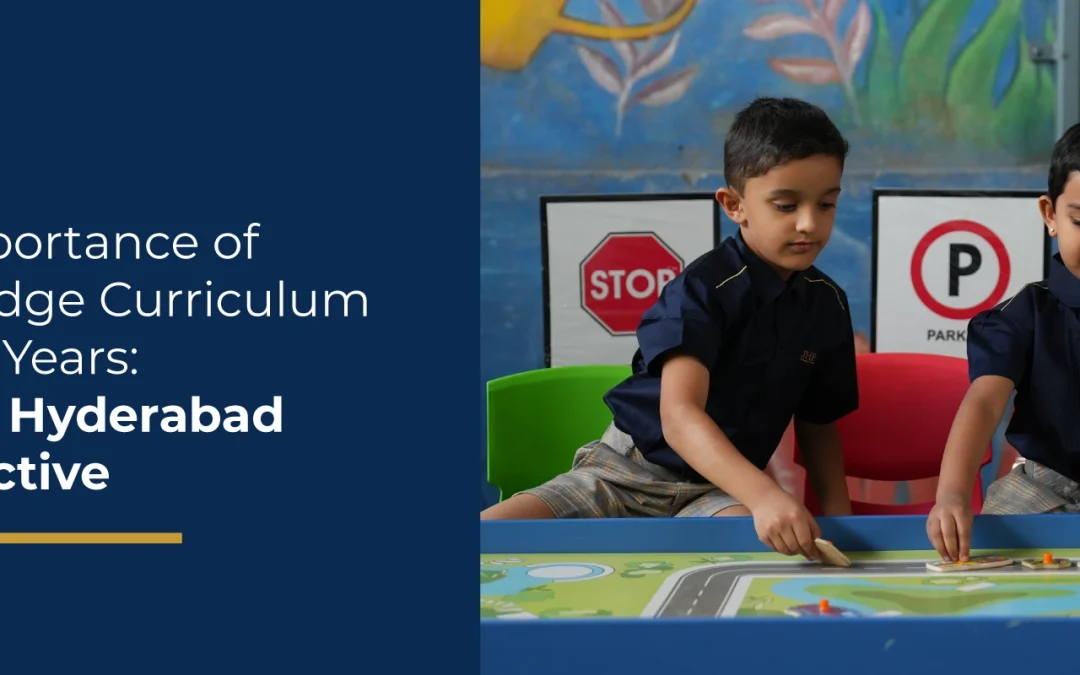
Adults sometimes underestimate play. To grown-ups, play can look like free time. Something done before “real learning” begins. But early childhood education has slowly shown that play is often the most serious form of learning. Within many best Cambridge schools in Hyderabad, play is designed in subtle ways. A storytelling corner might help children connect language with imagination. A puzzle area quietly strengthens logic. Even outdoor play builds coordination and teamwork. None of this is explained to children as lessons. They simply experience it. And because it feels natural, they stay engaged much longer than they would in a traditional instructional setup.
Building Confidence Before Academics
Another quiet strength of early Cambridge programmes is emotional development. A confident child learns faster. That sounds obvious, but it is often overlooked. When children feel safe to ask questions, make mistakes, or express themselves, something important happens. Learning stops feeling like a task and starts feeling like exploration. Parents researching the best international Cambridge schools in Hyderabad sometimes focus on facilities or global standards. But what usually leaves a deeper impression is the atmosphere inside the classroom. Children speak freely. Teachers listen patiently. Learning happening through conversation, stories, drawing, movement, and curiosity. Confidence grows in small moments like these.
Why Early Structure Still Matters
Freedom in learning does not mean chaos. Good early education still has structure. It just looks different from strict academic schedules.
Within a pre primary Cambridge school Hyderabad, routines still exist. Circle time, story sessions, group activities, quiet moments for reflection. These rhythms help children feel secure. Young children actually enjoy predictable patterns. It makes the world easier to understand. The difference is that structure supports curiosity instead of replacing it. That balance is harder to design than it sounds, which is why some schools spend years refining their early learning environments.
Learning Spaces That Inspire Young Minds
At JHPS Global Learning, we believe a child’s environment shapes how they explore the world. That is why we have created spaces that encourage curiosity and creativity every day. From spacious digital classrooms and modern science labs to our robotics and space labs, children learn by doing. With sports arenas, arts studios, a well-equipped library, and safe transport, we ensure students grow academically, physically, and emotionally in a supportive setting.
Final Thoughts
The way children think, play, and view the world is all influenced by early education. The Cambridge early years education focuses on curiosity rather than pressure, play rather than academics, and emotional confidence rather than pressure. In the same way, we at JHPS in Hyderabad have adopted this balance of academics and play. Rather than focusing on academics, the focus is on developing a strong academic base that can last for a long time.
FAQ’s
What is the Cambridge Early Years curriculum?
Cambridge Early Years is a play-based international learning framework focusing on curiosity, communication, creativity, and emotional development in young children.
Why is the Cambridge curriculum important in the early years of education?
It builds strong learning habits early, encouraging curiosity, confidence, and problem solving instead of memorization during children’s most formative developmental years.
How does the Cambridge Early Years programme support child development?
The programme supports development through play, exploration, storytelling, group interaction, and observation, helping children grow intellectually, socially, emotionally, and physically.
What age group does the Cambridge Early Years curriculum cover?
Cambridge Early Years generally supports children aged three to six, guiding learning during preschool, kindergarten, and early foundational school years.
How is learning made play-based in the Cambridge Early Years framework?
Learning happens through storytelling, puzzles, outdoor activities, art, and role play, allowing children to explore ideas naturally while developing thinking skills.